Farsight
The Last BattleFarsight is a Talking Eagle whose gift of flight and wide vision connects the besieged kingdom of Narnia to events beyond the immediate battlefield. First he brings Tirian news of defeat and loss; later he fights in the King’s last resistance. After the old world ends, Farsight’s view from the air reveals that Narnia has not vanished: the company has entered a truer Narnia, and he becomes one of the voices urging them onward.
Identity and Introduction
Farsight is identified by his flight as a Talking bird and recognized by Poggin as the Eagle Farsight. He circles down to Tirian’s company and alights on a rocky crag, greeting Tirian as King. His formal address helps establish that he is not one of the Ape’s followers, and Tirian welcomes him as a friend. Farsight’s arrival is not a moment of comfort: he warns that his news will make Tirian regret his coming, then reports what he has seen.
His identity is defined not only by the ability to fly, but by the perspective that flight affords. The narrative repeatedly places him above or apart from the group: he surveys distant places, attacks from the air, and later rises high enough to recognize the landscape of the real Narnia. In this way, his character links the ground-level struggle for survival with the broader pattern of the ending.
Witness to Narnia’s Defeat
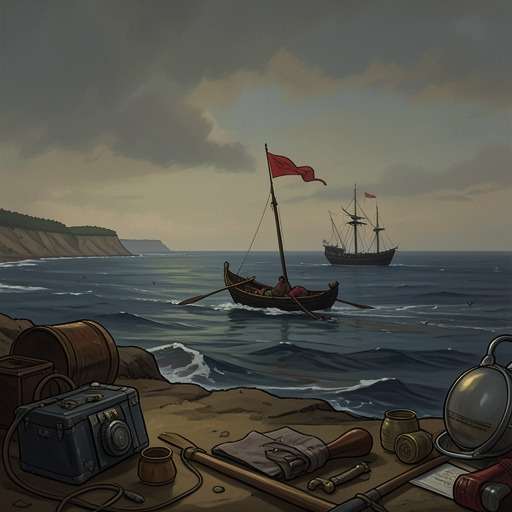
Farsight’s first report confirms that Cair Paravel has fallen. He describes the city filled with dead Narnians and living Calormenes, the Tisroc’s banner advancing on the royal battlements, and Narnian subjects fleeing in different directions into the woods. The attack came from the sea: twenty Calormene ships had arrived under cover of darkness two nights earlier. The news changes the scale of Tirian’s situation. The resistance is no longer defending a threatened outpost; the kingdom’s capital has already been taken.
Farsight has also witnessed the death of Roonwit the Centaur, five leagues nearer than Cair Paravel. He was with Roonwit in his final hour and carries the Centaur’s message to Tirian: all worlds draw to an end, and a noble death is a treasure no one is too poor to buy. The message gives personal loss a place within a larger reckoning, without disguising the political fact that Narnia has been conquered. Tirian answers the news with the conclusion that Narnia is no more.
Fighter in Tirian’s Resistance
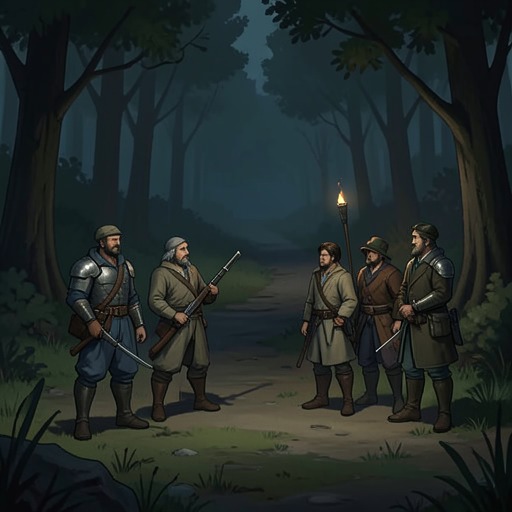
Farsight joins Tirian’s company not merely as a messenger but as a combatant. When Rishda Tarkaan escapes the King’s reach and summons the Tisroc’s warriors, Farsight’s presence is part of the danger Rishda must take into account: an Eagle can attack a fighter’s face and eyes from the air. In the battle plan, Tirian orders Farsight to hover and strike, assigning him an aerial role alongside Jill’s archery and the ground attack.
Jill sees the effect of this tactic as the fight begins. Farsight darts into the faces of the Calormenes while arrows come from the other side; men drop their swords or raise their hands to protect their eyes. The combined attack disrupts the enemy’s attention and helps Tirian’s party break into its ranks. Yet the advantage cannot last. The newly arrived Calormenes carry long spears, weapons that can keep them beyond the reach of a boar’s tusks or a unicorn’s horn, and numbers turn the engagement against the defenders. Farsight’s courage and skill contribute to the resistance, but cannot prevent the final battle from becoming a fight for survival.
Farsight also recognizes the purpose behind Rishda’s demand to drive captives into the Stable as an offering to Tash: he understands that Rishda hopes to win pardon for his own unbelief. His remark shows that he can read the political and religious calculation behind the enemy’s action, not just its immediate threat. The insight gives the moment an added irony: the supposed devotion of the conspiracy’s leader is an attempt to escape the consequences of his disbelief.
From the End of the Old World to the Real Narnia
When Aslan calls the stars home, Farsight is the only one who sees what is happening clearly at first. The stars descend as people, gathering behind the company and casting light on the land. Later, after the old world has ended and the company stands in a new landscape, Farsight spreads his wings, rises thirty or forty feet, circles, and returns to the ground. From above, he sees Ettinsmuir, Beaversdam, the Great River, and Cair Paravel still shining beside the Eastern Sea. He declares that Narnia is not dead: what lies around them is Narnia.
His recognition corrects the company’s initial understanding of the destruction they witnessed. Digory explains that the Narnia they knew had a beginning and an end and was a shadow or copy of the real Narnia, which has always existed and will always exist. The dear creatures and all that mattered in the old Narnia have been drawn into the real one. Farsight’s sight provides the concrete discovery that makes this distinction legible: familiar landmarks remain, but the company is no longer looking at the world they believed had been destroyed.
Guide on the Journey Inward
Farsight’s final role is to lead through action and example. As the company reaches the Great Waterfall, he tilts his flight upward and calls for them to go further up and further in. Tirian and the others follow the direction he sets. The phrase becomes a repeated call as the company travels beyond familiar Narnia and into the Western Wild, a country Tirian, Peter, and even Farsight have never seen before.
The journey keeps changing the scale of Farsight’s vision. His flight gives him the advantage of seeing across the country, but he is not portrayed as already knowing the destination: he, too, enters an unfamiliar region. He runs with the company through valleys, over hills, and across mountain lakes, and continues toward the steep green hill crowned by trees with silver leaves and golden fruit. When the company reaches the great golden gates, Farsight’s earlier call has prepared the others to press on rather than turn back. His arc therefore moves from seeing Narnia’s apparent end to helping the company recognize and enter a reality beyond the limits of their former world.